Fiber Optic & Copper Cable Certification

Ensure cabling performance and compatibility with the requirements of modern networks

Cable certification is the only reliable way to verify that a structured-cabling infrastructure meets the requirements of the active systems and the speeds it is expected to support. Layer 1 Technologies performs testing and certification for copper and fiber-optic cabling, confirming compliance with international standards and the ability to operate at any required data rate and device power level.

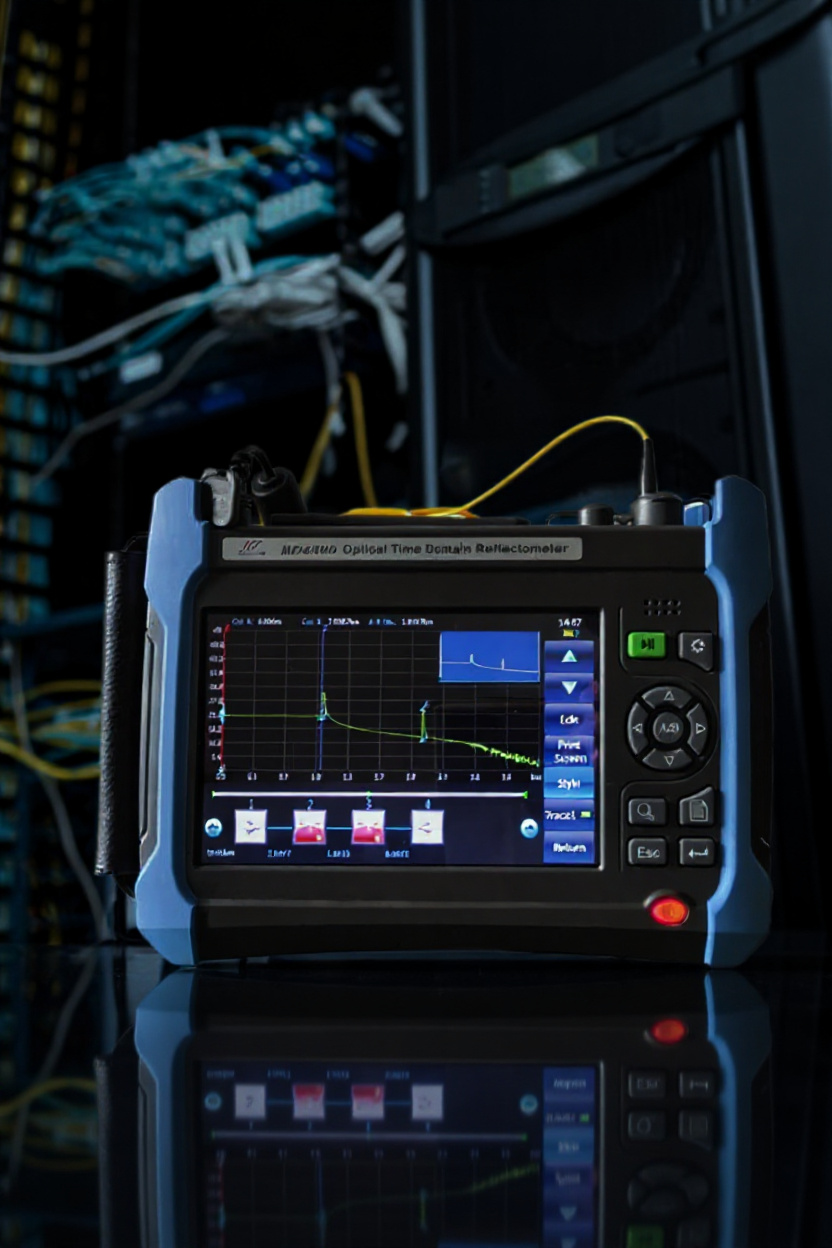
Fiber Optic & Copper Cable Certification

Copper and fiber cabling certification with Cat8.2 and OTDR testing

Technical Scope

  • Copper cabling qualification: Multi-Gigabit validation to guarantee operation at 2.5/5/10G Ethernet and PoE device powering up to 90 W (802.3bt).
  • Copper cabling certification up to Cat8.2: Measurements of attenuation, NEXT, FEXT, return loss, propagation delay and 20+ parameters, per ISO/IEC 11801 and ANSI/TIA-568.
  • Tier 1 basic certification (fiber): Insertion-loss and length verification for single-mode (OS1/OS2) and multi-mode (OM1–OM5) fibers, in line with IEC 14763-3 and TIA-568.3-D.
  • Tier 2 extended certification (fiber): OTDR testing to analyze and locate events for precise identification of losses, connections and splices across the entire link.
  • Detailed measurement reports with pass/fail per channel and full documentation for the technical dossier.

Frequently Asked Questions (FAQ)

When is cabling certification mandatory in Greece?

There is no legal obligation to certify structured cabling—or low-voltage cabling in general—in Greece. The only formal requirement concerns electrical (mains) installations, which require an Installer’s Declaration (ΥΔΕ)—a service that Layer 1 Technologies can also provide.

That said, cabling certification is the only way to prove proper operation and is recommended for every installation. In some cases it is recommended or required:

  • When cabling and the active network are delivered by different contractors or in different project phases, so the responsibility for the physical layer is documented.
  • In environments certified to ISO 24764 (Data Center Cabling) or TIA-942, cabling certification is a mandatory requirement—while in ISO 27001 projects it serves as evidence of infrastructure reliability.
  • In projects delivered via RFP/tender, where submission of certification results is a prerequisite for acceptance.
  • During troubleshooting, to provide documented diagnosis of network issues originating from the physical layer.
Want to know if your network cabling truly meets standards and application requirements?
Request Cabling Certification

Related