
Data Center Cooling Technologies
Efficient and precise cooling systems are fundamental to the performance and longevity of any data center. The rapid rise of AI computing and high-density racks has made thermal management one of the most critical factors in infrastructure design.
Layer 1 Technologies specializes in advanced data center cooling systems — from precision air conditioning and in-row cooling to liquid and immersion-based solutions — ensuring continuous availability and optimal PUE for every configuration.
Parameters Defining the Choice of Cooling Technology
The selection of an appropriate data center cooling technology depends on a set of factors related to thermal density, energy efficiency, and the architectural design of the facility. Each of these parameters influences both the technical feasibility and the long-term operational cost of the system.
Power Density per Rack
The power consumed by each rack is the most critical indicator when determining the right cooling solution.
Traditional data centers were designed for 5–10 kW per rack, while today’s AI and HPC applications often exceed 40–60 kW or even higher.
As density increases, air-based cooling alone becomes less efficient, making liquid or hybrid solutions essential to maintain optimal thermal conditions.
Energy Efficiency and PUE
Power Usage Effectiveness (PUE) measures the ratio of total facility energy consumption to the energy delivered to IT loads.
Liquid cooling technologies achieve lower PUE values, as they reduce energy losses associated with air-based heat transfer and mechanical ventilation systems, improving overall efficiency.
Climate Zone and Location
In cooler regions, air cooling with free cooling systems can remain highly efficient.
However, in hot or humid climates, hybrid or fully liquid-based solutions are often required.
Cooling system design must always consider seasonal temperature variations and the availability of water resources in the specific location.
Data Center Architecture and Layout
The rack arrangement, airflow management (e.g. hot/cold aisles), the presence of raised floors, and the overall ventilation structure determine which cooling technologies are compatible or whether space redesign and retrofitting are necessary.
Maintenance, Scalability, and Total Cost of Ownership (TCO)
Air-cooled systems are simpler and more affordable to maintain but are less scalable at higher power densities. Liquid-cooled systems, while having a higher initial CAPEX, deliver superior energy efficiency and can significantly reduce OPEX over the medium and long term.
Selecting the right technology requires balancing initial investment with long-term performance and operational sustainability.
Conventional Cooling Technologies (Air / Air–Liquid)
Traditional data center cooling technologies rely primarily on airflow to transfer heat away from IT equipment.They remain the most common and cost-effective choice for low- and medium-density data centers, and with the addition of advanced control systems and air–liquid heat exchangers, they can also support more demanding environments.
CRAC / CRAH Units (Computer Room Air Conditioning / Air Handling)
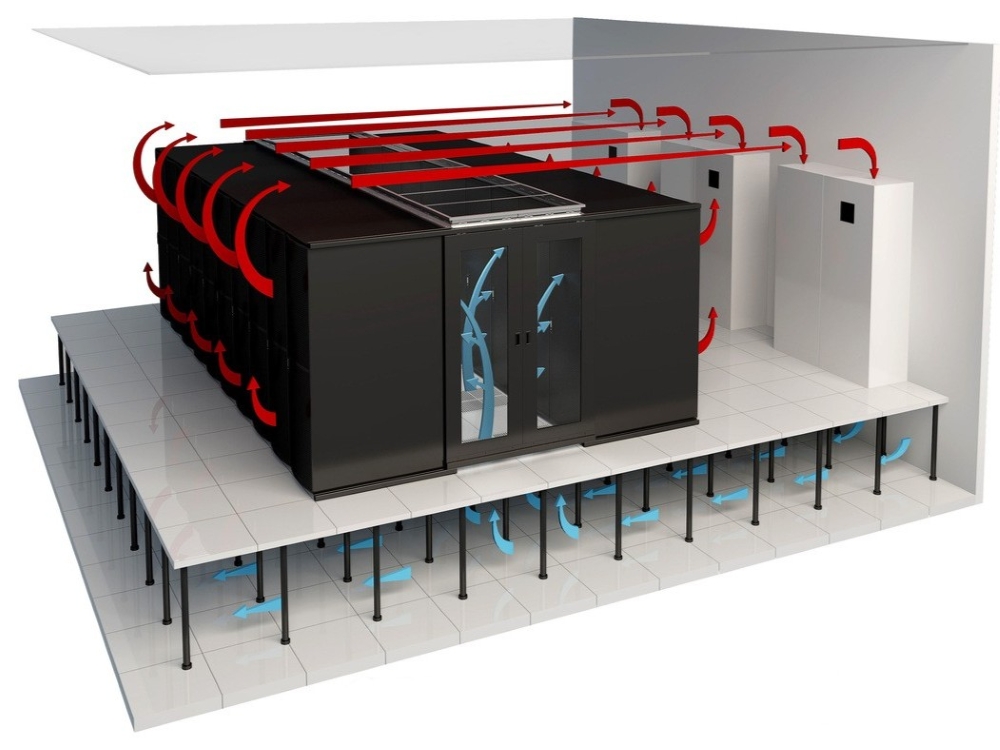
These represent the most classic and established cooling method in data center environments.
Cold air is generated by air conditioning units and distributed throughout the room via raised floors or ducted air plenums.
- CRAC units use a refrigeration cycle, similar to standard air conditioners.
- CRAH units are supplied with chilled water from a chiller or cooling tower system.
Advantages:
- Simple architecture and proven reliability
- Easy maintenance and widespread technical expertise
- Flexible integration with existing HVAC systems
Limitations:
- Reduced efficiency at higher densities (>15–20 kW per rack)
- Greater energy losses due to long air travel distances
Typical power density: up to 15 kW per rack
In-Row / Close-Coupled Cooling
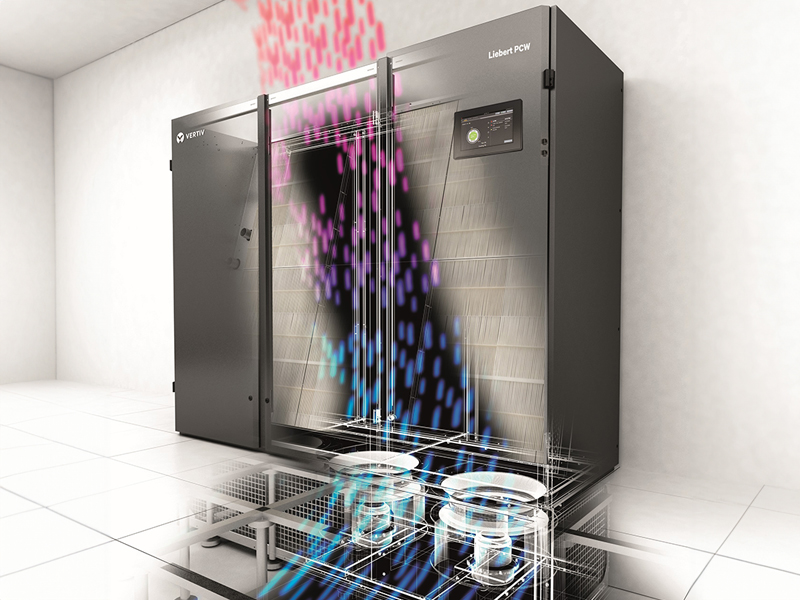
In this configuration, cooling units are positioned directly between the server racks, close to the heat source.
Cold air is delivered straight to the front of the servers and returns warm to the back of the same unit, creating a localized cooling loop.
Advantages:
- Minimizes air travel distance, improving overall efficiency
- Ensures more uniform temperature distribution across racks
- Reduces mixing of hot and cold air, increasing cooling effectiveness
Limitations:
- Limited scalability in very large data halls
- Requires precise airflow management and proper containment to prevent recirculation
Typical power density: up to 25 kW per rack
Indirect Evaporative Cooling
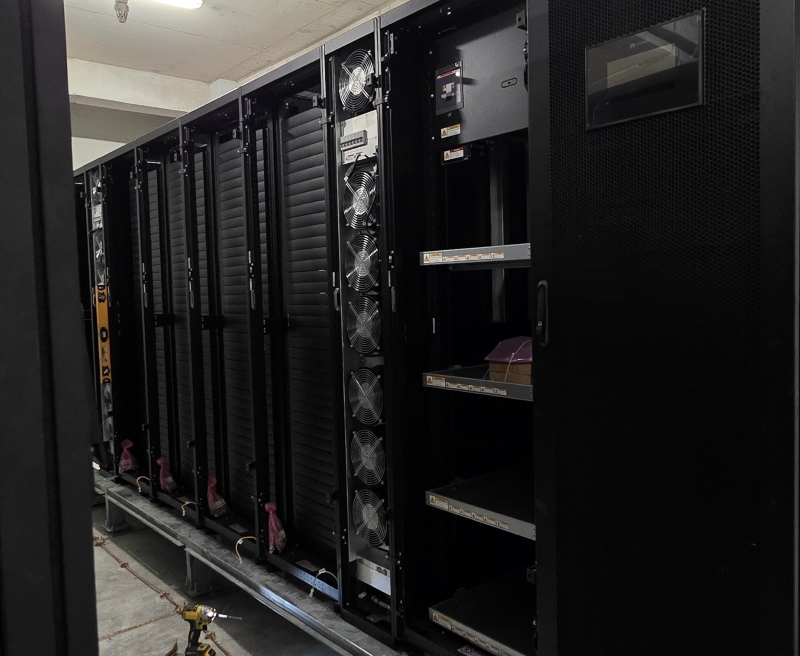
This method uses the natural evaporation of water to remove heat from the data hall without mixing indoor and outdoor air.
Cooling is achieved through a heat exchanger that transfers heat from the internal circuit to an external airflow assisted by water evaporation.
Advantages:
- Very high energy efficiency and significantly reduced PUE (typically 1.1–1.3)
- Lower dependence on traditional chiller-based systems
- Environmentally friendly operation with reduced mechanical cooling demand
Limitations:
- Performance depends on climate zone and ambient humidity levels
- Requires regular water treatment and filter maintenance to ensure reliability
Typical power density: up to 30 kW per rack
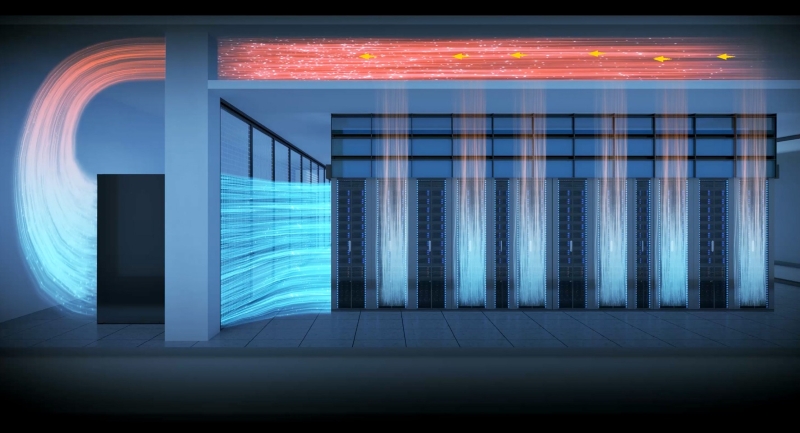
Chilled Water / Fan Wall Cooling
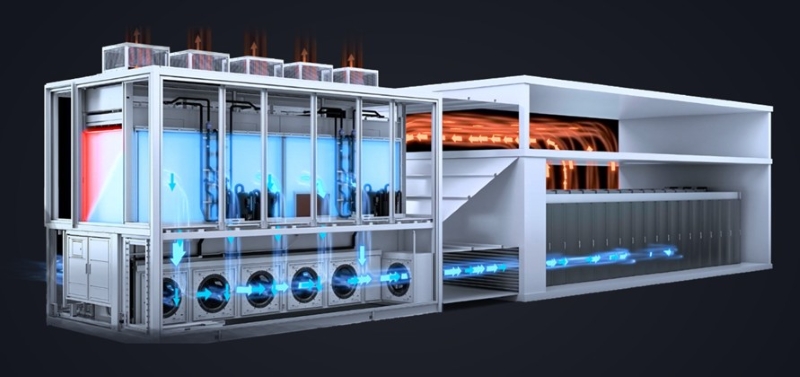
In these systems, cooling is achieved through a chilled water loop that supplies in-room cooling units or fan walls located along the perimeter of the data hall.
The resulting airflow ensures uniform temperature distribution across the entire row of racks.
Advantages:
- Delivers stable and predictable performance even under high loads
- Ideal for medium to large data centers
- Can be implemented as a retrofit solution in existing facilities
Limitations:
- Higher initial investment cost (CAPEX)
- Requires a complex piping infrastructure and careful installation planning
Typical power density: 20–40 kW per rack, depending on room layout and airflow configuration
Pure Liquid Cooling Technologies
Liquid cooling technologies are implemented when thermal densities exceed the capabilities of conventional air-based systems.In these solutions, heat is removed directly from the components that generate it — such as CPUs, GPUs, and memory modules — via a coolant circuit, ensuring extremely high efficiency and a stable thermal profile even under heavy computational loads.
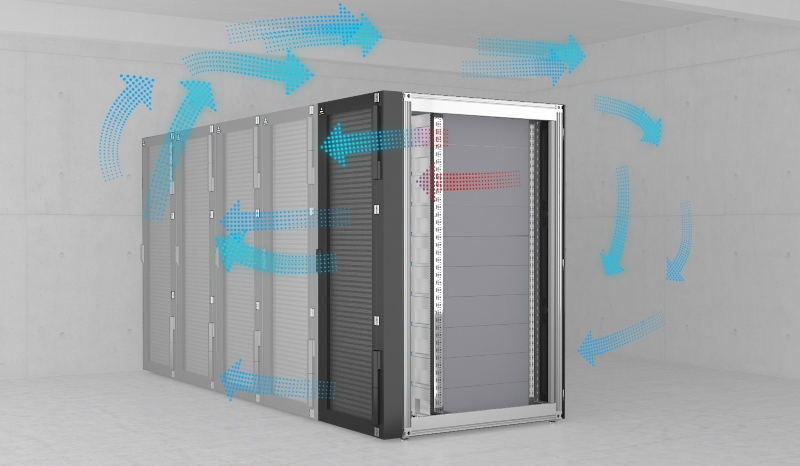
Rear Door Heat Exchanger (RDHx)
In RDHx technology, the hot air exiting from the rear of the rack passes through a liquid-cooled heat exchanger mounted on the back door.
The air is immediately cooled before it re-enters the room, eliminating the need for large-scale air circulation within the data hall.
Advantages:
- Can be retrofitted to existing racks with minimal infrastructure changes
- Low energy consumption and high operational efficiency
- Simple maintenance and minimal moving parts
Limitations:
- Requires a chilled water circuit and a Coolant Distribution Unit (CDU)
- Higher sealing and monitoring requirements for fluid safety
Typical power density: 30–40 kW per rack (or higher, depending on the coolant flow rate)
Direct-to-Chip (DTC) / Cold Plate Cooling
In this method, coolant circulates through microchannels that come into direct contact with the surfaces of CPUs, GPUs, and other high-heat components.
The heat is transferred directly into the liquid circuit and then dissipated through a heat exchanger or Coolant Distribution Unit (CDU).
Advantages:
- Exceptionally high heat removal efficiency
- Supports very high rack densities (>80 kW per rack)
- Maintains a stable and uniform operating temperature even under extreme computational loads
Limitations:
- Requires specialized servers equipped with cold plates and compatible fittings
- More complex installation and maintenance process
Typical power density: 80–120 kW per rack
Immersion Cooling
In the most advanced form of liquid cooling, IT equipment (server boards or modules) is fully submerged in a special dielectric fluid.
Heat is transferred directly into the liquid, which is then recirculated through a heat exchanger or external cooling loop for dissipation.
Advantages:
- Extremely high energy efficiency (PUE < 1.1)
- Supports ultra-high rack densities (>100 kW per rack)
- Silent operation and complete elimination of airflow requirements
- Reduced mechanical complexity and lower long-term maintenance
Limitations:
- High initial capital cost (CAPEX)
- Requires hardware certified for immersion use
- Limited flexibility for incremental upgrades or mixed environments
Typical power density: >100 kW per rack
Cooling has become one of the most critical design parameters in modern data centers. The choice of the right cooling technology depends not only on power density or hardware type, but also on how the cooling system integrates into the organization’s overall energy and operational strategy.
Traditional air-based solutions continue to offer reliability and simplicity, while air–liquid hybrid technologies represent an important step toward PUE optimization and reduced operational costs.
For high-density, HPC, and AI workloads, liquid cooling has become the only viable path to ensure both stability and energy efficiency.
As a certified partner of Huawei and Vertiv, Layer 1 Technologies designs and delivers end-to-end thermal management solutions for data centers of any scale.
Our services include engineering studies, technology selection, installation, commissioning, and ongoing technical support under SLA.
Whether upgrading an existing facility or designing a new one from the ground up, Layer 1 Technologies ensures maximum efficiency, compliance with international standards, and future-ready scalability for every project.